
Polyoak Packaging marked its 12th annual Clean-Up Day this September, bringing employees and their families together across South Africa to take practical action for cleaner communities.
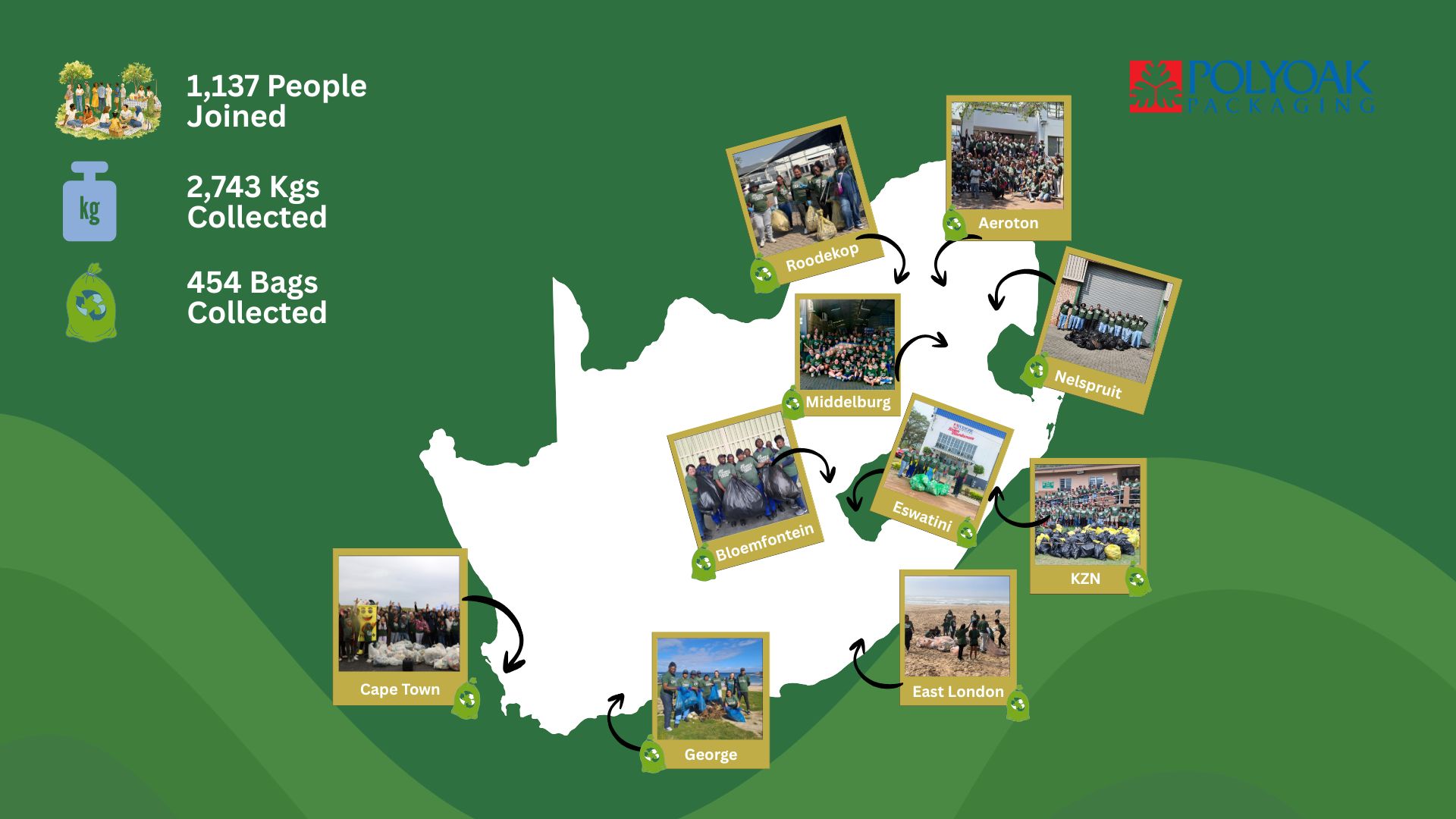
This year, 10 Polyoak sites nationally took part, with 1,137 volunteers collecting 2,743kg (454 bags) of litter. From beaches and public spaces to communities around our operations, employees gave their time to remove waste from the places where we live and work.
But the day was about more than simply picking up litter.
Turning waste into a resource
As a packaging manufacturer, Polyoak understands the importance of keeping recyclable materials in circulation. That is why sorting the waste collected forms an important part of our Clean-Up Day initiative.
Volunteers separated recyclable materials from general waste, helping to show what can happen when packaging is collected and sorted correctly. Plastics, paper, glass and other materials can retain value when they enter the right recycling streams. When recyclable materials are mixed with general waste, contamination can make them much harder to recover.
The message is simple: what we do with waste matters.
Polyoak was joined by industry organisations Polyco, Plastics SA and PETCO as well as non-profit organisation Clean-C, whose involvement helped volunteers better understand the role that collection, sorting and recycling plays in supporting a circular economy.
Making a difference starts locally
Family Clean-Up Day has become a proud Polyoak tradition since the first event in 2014. What started as a local employee initiative has grown into a national campaign supported by hundreds of employees and their families.
The initiative connects directly to our role in the packaging industry. It gives our people the opportunity to see first-hand the impact of littering and the importance of responsible waste management.
One clean-up will not solve South Africa’s waste challenges. However, every bag collected, every recyclable item recovered and every person who leaves with a better understanding of waste, adds to the bigger picture.
After 12 years, our message remains clear: meaningful change starts when we take responsibility for the spaces around us.