
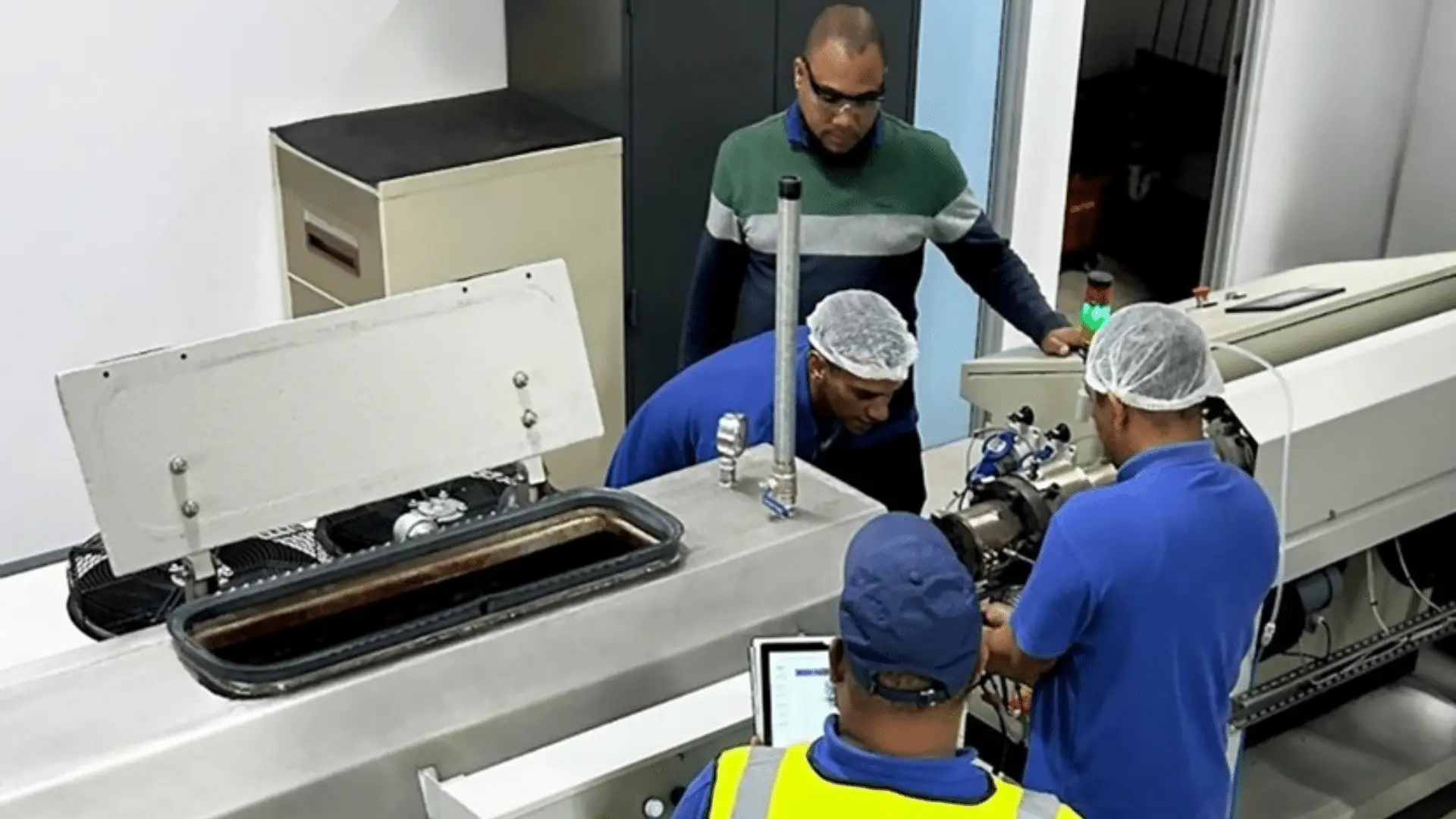
In an era where artificial intelligence promises speed, efficiency, and automation, one question continues to surface across the manufacturing sector: can AI truly replace skilled artisans? In plastics manufacturing, the answer is clear – it cannot. Behind every high-performing production line is a skilled machine setter who understands not just the machine, but the material, the environment, and the subtle signals that technology alone cannot interpret.
As South Africa strengthens its position in manufacturing, the demand for skilled setters and artisans continues to grow. The professionals do far more than operate machinery – they optimise production, maintain quality, and solve complex challenges in real time. To support the development of these critical skills and ensure the industry remains competitive, Polyoak Packaging invested in a dedicated Trade Test Centre, managed by the Polyoak Business School.
The creation of the Trade Test Centre was driven by necessity. Apprentices reached trade test readiness, yet no accredited centre existed to assess them. This gap highlights an opportunity for a dedicated facility, now the first of its kind in South Africa – designed to certify skilled machine setters in plastics manufacturing and close a critical skills gap.
What sets this Technical Centre apart is its focused approach. It prioritises plastics manufacturing, particularly the Plastic Manufacturing Machine Setter Programme, while also offering training in hydraulics, pneumatics, electrics, and maintenance. This ensures that learners develop into well-rounded artisans capable of managing complex manufacturing systems.

Skilled setters in plastic manufacturing remain the backbone of plastics manufacturing because they combine technical expertise with real-time problem-solving. They ensure machines operate efficiently while producing high-quality products, even as conditions change. Their understanding of raw material dynamics allows them to anticipate how plastics will behave and adjust processes accordingly.
AI and automation cannot replicate this level of adaptability. While technology excels at repetitive tasks, the industry involves constant variability. Materials shift, environments change, and machines require continuous optimisation. Skilled setters rely on experience and instinct – recognising subtle changes in sound, vibration, or performance long before systems detect faults.
The relationship between AI and skilled artisans is not one of replacement, but support. AI enhances efficiency, but artisans bring innovation and adaptability. Just as power tools enhance craftsmanship rather than replacing it, AI will amplify the capabilities of skilled setters.
Hands-on experience remains essential because plastics manufacturing is inherently unpredictable. It requires balancing multiple variables – material, temperature, machinery, and timing. Only experienced professionals can navigate these complexities.
The Trade Test Centre continues to play a critical role in building this expertise. By providing specialised training and certification, it equips individuals with the skills needed to succeed in a demanding and evolving industry. As manufacturing technologies advance, the need for skilled setters will only increase.
While the world embraces AI, plastics manufacturing reminds us of the enduring value of human skill. AI can optimise processes, but it cannot replace the insight, intuition, and innovation of experienced artisans. The future of the industry depends not only on technology, but on the people who understand how to use it.
This is a strong reminder that practical experience and technical intuition still play a huge role in manufacturing. AI can improve efficiency, but skilled setters bring real-time judgement that machines simply can’t replicate.